
10 Home Maintenance Records Every Homeowner Should Keep
Somewhere in your house right now, there's a drawer with a mystery receipt in it. You know it's important. You just can't remember what it's for.
That's the problem with home records. It's not that people don't have them, but that they're scattered across email, a kitchen junk drawer, an old filing cabinet, and sometimes a shoebox.
When the furnace acts up or a buyer asks a pointed question, you're suddenly digging for something you swear you kept.
A little bit of organization now saves a lot of scrambling later.
Here are the ten records worth keeping track of, and why each one is important.
1. Home Repair Records
Every real repair deserves a paper trail: what broke, who fixed it, what it cost, and when. If a plumber replaces a section of pipe under the kitchen sink, write it down.
Six months from now, if something looks similar, you'll know exactly what was done the first time instead of starting from scratch.
Worth noting: the date, the problem, the fix, materials used, who did the work, the cost, any warranty, and a photo if it'll help you later.
This habit pays off in an unexpected way, too. If you notice you've called someone out for the same water heater three times, that's your sign it's time to replace it, not repair it again.
If selling may be in your future, it also helps to understand
If selling may be in your future, it also helps to understand which repairs matter most before selling a house in Pacifica before deciding where to spend your money.
which repairs matter most before selling a house in Pacifica before deciding where to spend your money.
2. Routine Maintenance Records
HVAC tune-ups, gutter cleaning, chimney inspections, pest treatments, dryer vent cleaning — the unglamorous stuff that keeps a house running and, keeps it safe.
Note the date, the company, what they did, and whether they mentioned anything to watch or follow up on.
Do this consistently and you end up with something better than a generic maintenance checklist: a schedule built around your house, based on what it actually needs.
3. Contractor and Service Provider Records
Nothing's more frustrating than needing an electrician you used three years ago and having absolutely no way to find them again.
Save the business name, contact person, phone, email, license info if relevant, and a quick note on how the job went.
It's also worth tracking which contractor touched which part of the house.
If someone opens your electrical panel five years from now, "here's who wired this last" is genuinely useful information to hand them.
4. Appliance Details and Serial Numbers
Model numbers, serial numbers, purchase dates, warranty windows — for the refrigerator, range, dishwasher, washer, dryer, water heater, and anything else with a manufacturer's label stuck somewhere.
It's a small thing, but not having to drag the fridge out from the wall to squint at a sticker the next time it needs service is a genuine convenience.
A quick photo of each label is an easy way to accurately back this up.
5. Paint Colors and Material Records
This one's small until it isn't.
A tiny wall repair can spiral into repainting an entire room because nobody remembers whether it was "Swiss Coffee" or "Alabaster."
Save the manufacturer, color name and number, finish, and where you bought it for every room, plus the exterior.
The same goes for flooring, tile, grout, and countertops. Knowing the product line behind a damaged floor plank, or the exact grout color in a bathroom, is the difference between an easy match and a frustrating guessing game.
6. Warranty, Receipt, and Manual Records
A warranty only helps if you can actually find it and know what it covers.
Keep coverage info together with the receipt, the model number, and the installation date for appliances, roofing, windows, HVAC, water heaters, and any major repair with workmanship coverage attached.
You don't need to hang on to every manual that ever came in a box, though.
If the manufacturer has it posted online, just save the model number and the link, and keep the paper only if it has something unique on it, like your specific purchase or warranty details.
7. Major Renovation and Improvement Records
Kitchen remodels, roof replacements, new windows, electrical or plumbing upgrades, additions — anything that meaningfully changes the house deserves its own record.
Note who did the work, what it involved, materials, permits, inspections, and final cost.
Before-and-after photos matter here, especially for anything that ends up hidden behind a wall or under new flooring once the project wraps.
Years later, that photo might be the only record of what's actually back there.
Before taking on a large project for resale, consider what actually matters before selling a house in Pacifica. The most expensive improvement isn’t always the one buyers value most.
what actually matters before selling a house in Pacifica. The most expensive improvement isn’t always the one buyers value most.
8. Home Maintenance and Improvement Cost Records
Not every dollar — just the meaningful ones.
Track what you spend on real repairs, maintenance, and improvements, and separate the routine stuff from the bigger investments.
A furnace tune-up and a full furnace replacement aren't the same category, and treating them differently makes the numbers more useful later.
Hang onto the invoices for anything substantial.
Your tax professional may need them to figure out whether a project affects your home's cost basis, and having the paperwork ready makes that conversation a lot shorter.
9. Inspection Report Records
An inspection is a snapshot of a single moment — what matters is what happened after.
Keep the full report and the inspector's contact info, but also connect each finding to whatever you did about it: the repair invoice, the follow-up inspection, the contractor's notes.
If you're here in Pacifica, pay extra attention to anything involving moisture, drainage, or salt-air exposure on exterior materials.
Coastal homes wear differently, and having a record of when an issue first showed up — and what you did about it — is worth its weight in gold down the line.
If you’re new to coastal homeownership, my guide to living in Pacifica explains how fog, moisture, salt air, and neighborhood microclimates affect local homes.
10. Annual Home Maintenance Summary Records
At the end of each year, take twenty minutes and write a short recap: what got fixed, what got serviced, what got replaced, roughly what you spent, and what's still on the list for next year. One page is plenty.
This is also a good moment to look back through your contractor list and warranty file and make sure nothing's expired or gone stale.
A once-a-year check-in keeps the whole system useful.
How to Organize Home Maintenance Records
The easiest system is the one you'll actually keep using.
Pick one central place to log the essentials, and store the supporting receipts, reports, and photos in folders; paper or digital, whichever you'll actually maintain.
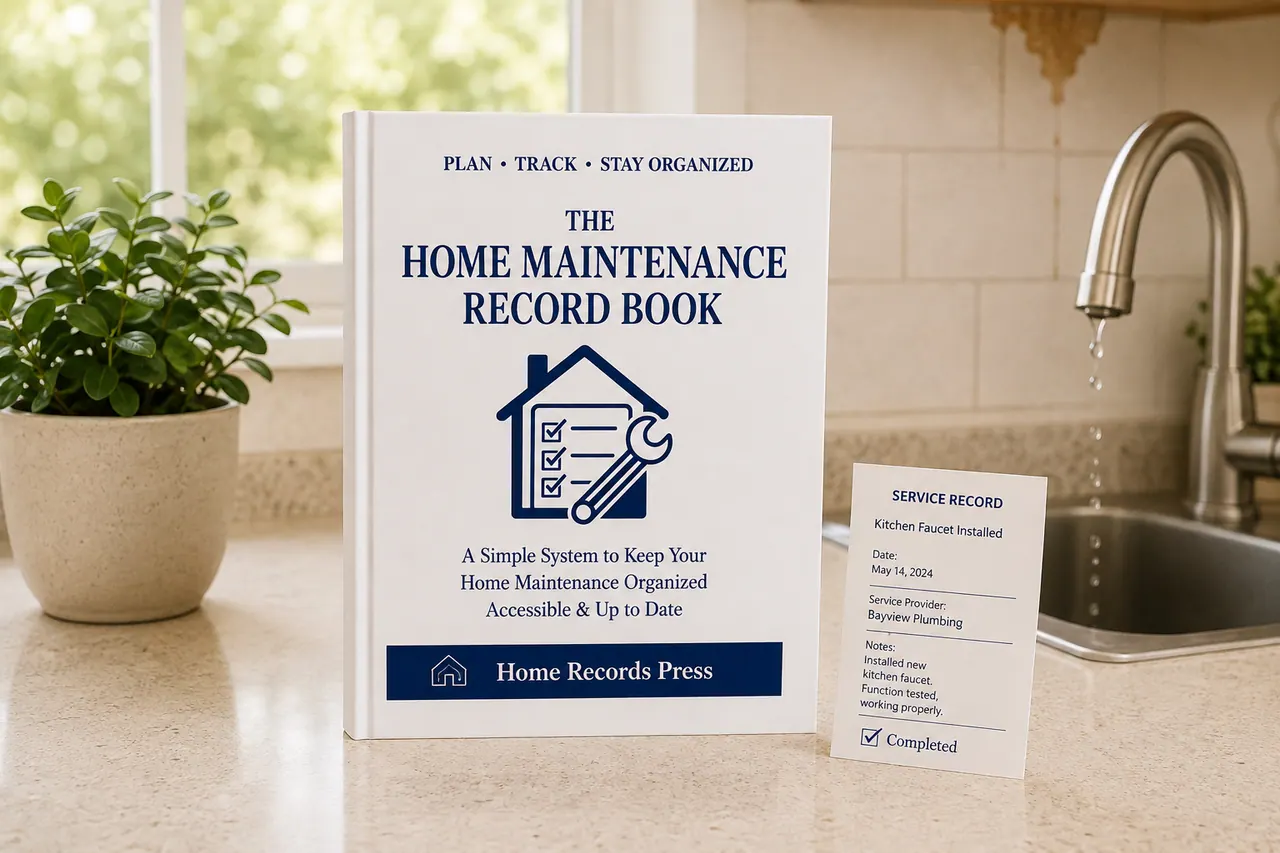
If you'd rather not build that system yourself, I wrote The Home Maintenance Record Book. It's a ready-made place to log all ten of these categories as they come up, so the information stays in one spot instead of scattered around the house.
A ready-made simple system to log all ten of these categories as they come up.
Start with what you already know. Add to it as things happen.
A few years in, you'll have a genuinely useful history of one of the biggest investments you own.
Frequently Asked Questions
How long should you keep home maintenance records?
For as long as you own the home, keep records of major repairs, improvements, and system replacements.
Hang onto warranty documentation for the full coverage period, and check with a tax or insurance professional before tossing anything that might matter in the future.
Should you keep receipts for home repairs?
Yes, at least for anything substantial.
A receipt documents the date, cost, and company; details that can matter for a warranty claim, an insurance claim, or a future tax question.
What home improvement records matter most when selling?
Permits, contractor invoices, inspection reports, warranties, and completion dates.
They won't replace required disclosures or inspections, but they make both far easier to complete accurately.
Should maintenance records stay with the house?
It's worth leaving appliance manuals, transferable warranties, and paint or material details for the next owner.
Keep copies of anything you'll need for taxes or insurance.
Are digital or paper records better?
Whichever one you'll actually use.
Paper is easy for quick notes; digital is better for photos, invoices, and reports.
Most people end up with some mix of both: A central written record backed up digitally.
After years of helping sellers prepare for their sale, I wrote The Home Maintenance Record Book. It gives homeowners a simple place to track it all.
Grab a copy on Amazon.
Thinking about buying, selling, or just want a second opinion on your home's condition before you list?
I work with homeowners throughout Pacifica and the Peninsula, and I'm always happy to talk.
Vicki Moore, Realtor
✉️ vicki@pacificacarealtor.com
eXp Realty of California, Inc. | DRE 01234539